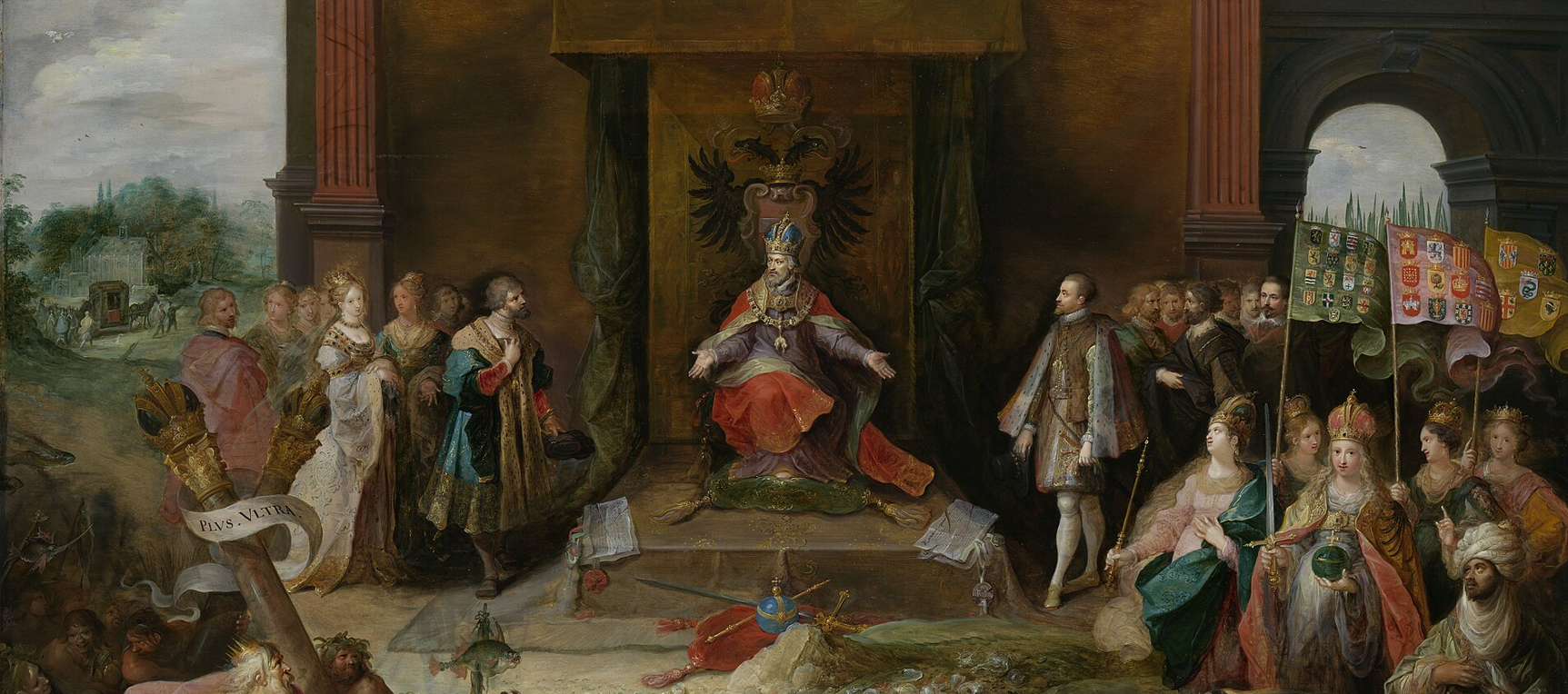
One helpful way to think about the relationship between culture and genetics is to instead think about the relationship between art and culture. Ask yourself, “does art shape culture or does culture shape art?”
Because art is more tangible than the gene, it becomes a bit easier to recognize what I mean when I suggest that there’s no strict delineation between the two. Art is obviously an expression of culture, but cyclically, it then goes on to influence the very culture that first expressed it.
Like art and culture, genes and culture aren’t simply categories that can be flippantly distinguished. They inform and mold each other in both complementary and reactionary ways, but are ultimately inseparable and essential to one another.
The mildly amusing fact that Richard Dawkins’ coined the term “meme” tends to overshadow the more profound implications the word carries. Prior to it invoking digital comedy alone, the concept was detailed in The Selfish Gene and then The Extended Phenotype. Both are truly “must-reads” (especially for biologists), but that aside; I’d like you to temporarily forget about the connotation accompanying the word today. Meme is used as a technical term describing a unit of cultural transmission.
To elaborate, a meme refers to ideas that replicate, mutate, and compete for survival in a manner structurally analogous to genes. They are units of cultural information, and crucially, they reproduce, they spread to other minds and thus undergo a selection process. I will emphasize that a meme’s success (in terms of selection) does not necessitate that “the best idea has won out”, or anything like that. A meme can be “true,” but persists not because it is “true;” it persists because it is fit. And fitness in the memetic sense means being memorable, transmissible, resonant and contagious.
So, a meme’s survival and spread indicates its capacity to “go viral”, allowing it to persist throughout time within a cultural consciousness. Unlike genes, memes are learned through sociality. As cultural units of information, they then behavior, and may be imitated across time for a longer or shorter durations based on their perceived utility.
Now, looking through our “Dawkinsian lens,” we can go back to my art question; we can view art, trends in art history, in fashion, in ideas, in language; we then see art as not merely an ornament of culture and instead a replicating organism within it. Culture itself can then be seen as a kind of evolutionary arena in which these symbolic units struggle, hybridize, and entrench themselves with varying degrees of success. The gene shapes the meme by giving human minds certain cognitive proclivities, while the meme shapes the gene by altering the behavioral environment in which biological selection occurs. . .
An example: religion is a meme. Whether or not it is “the one true religion,” doesn’t matter here—it’s a meme either way. I will now use one religion (which was selected arbitrarily) to illustrate how memes can drive evolution by altering selection pressure.
Note that a devout Christian will preferentially marry (i.e., reproduce with) another Christian. It is unlikely, and assumed to be infrequent that a host of the Christian-meme would opt to pair-bond with, say, a carrier of the pagan Mapuche-meme. We can expect Christianity here to affect the host’s decision, such that a non-christian husband/wife would be (perhaps rightfully) viewed as incompatible in faith.
This memetic expression is there seen guiding or precluding certain genetic outcomes, as surely as many sects are known to teach against marriage with a “heretic.”
In effect, this is a meme-driven border between the two distinct religious populations. It is a border of the same utility as physical, geographical divides among groups. Geography, of course, gives rise to genetic drift, and so too does religion. . .
That is to say, if a high enough percentage of our partnered Christian’s reproduce with each other (as influenced by their meme’s expression), and if this occurs with regularity; no doubt we will find their rise in number. What are they propagating?
Crucially, hosts here aren’t just carriers of memes: they will be spreading their very own combination of genes, which predisposed themselves to become Christian to begin with. Those Christian-oriented genes will be rewarded by selection—and, so will the preference for preferring Christian-oriented genes persist. They too will be selected for, necessarily, and via the partner who evidently contains the same thing. This is a process called runaway selection.
If this recurs with greater frequency than it did for, say, atheistically-inclined individuals (who carry atheistically-inclined genes), then over generational time we may see an ever increasing percentage of the population contain Christian-oriented genes, as it overshadows any competing meme that’s replicating at a lower rate. Over evolutionary time: even if the religion changes or secularizes, we should expect to find remnants of the moral principles, which were disproportionately selected for remain embedded in the psyche.
Certain meme’s will surely cling to certain neuroanatomies at differing rates. On a long enough time scale, memetic differences can then express themselves as phenotypic expressions of the gene—ergo; memes arose from collections of genes, but collections of memes then affected the very genes giving rise to them.
And this makes perfect sense, because memes are apart of our environment, thus they affect the way we behave. Any Darwinian worth his salt understands that environmental factors such as an organisms geography, its climate and so on. Those are all inseparable from its evolution, which is the organism itself. But more simply, the environment shapes the direction toward which a species evolves.
As much as a given species affects its environment, so too has its environment affected the species. As ecologists have established: a species that arises from, and remains in a given environment will inevitably become ‘fit’ for that environment over evolutionary time. The species’ very anatomy will conform to it, as will its behavior, and in the meantime—likewise, the species will shape its environment (e.g., a beaver making a dam, a bird making a nest, a human making a bridge, a human making a religion, a human making laws, etc. etc. etc).
Morals themselves, if selected for across evolutionary time, then they too will inevitably alter the mind and develop a degree of permanence. . . I’ll provide a quote and conclude: Niels G. Waller et al., published research for the journal of Psychological Science, finding that genes comprise roughly 50% of all influence on “Religious Interests, Attitudes, and Values”. Their results followed with this conclusion:
“Social scientists will have to discard the a priori assumption that individual differences in religious and other social attitudes are solely influenced by environmental factors.”
It’s a good citation and worth reading elsewhere. They get this right: personality is embedded in genetic material. . . but, then they suggest that behavior isn’t “solely influenced by environmental factors”. . . Ah. I would submit: aren’t genes themselves solely influenced by environmental factors? If not, they wound’t be here, rendered extinct via selection.
And of course, this finding is wrong in my view: it’s not 50-50%. The division of environment and genetics only confuses the genes’ role as purely contingent and reactive to its world, while simultaneously being the world unto its own.
Art, the environment, culture and biology are not only correlative, but function as a unity when properly seen as a complex feedback-loop of reinforcing influence. Each component acts on the other, which is why describing culture and genetics as merely convergent subjects remains inadequate. The more you untangle the knot, the more you will find the same rope.